


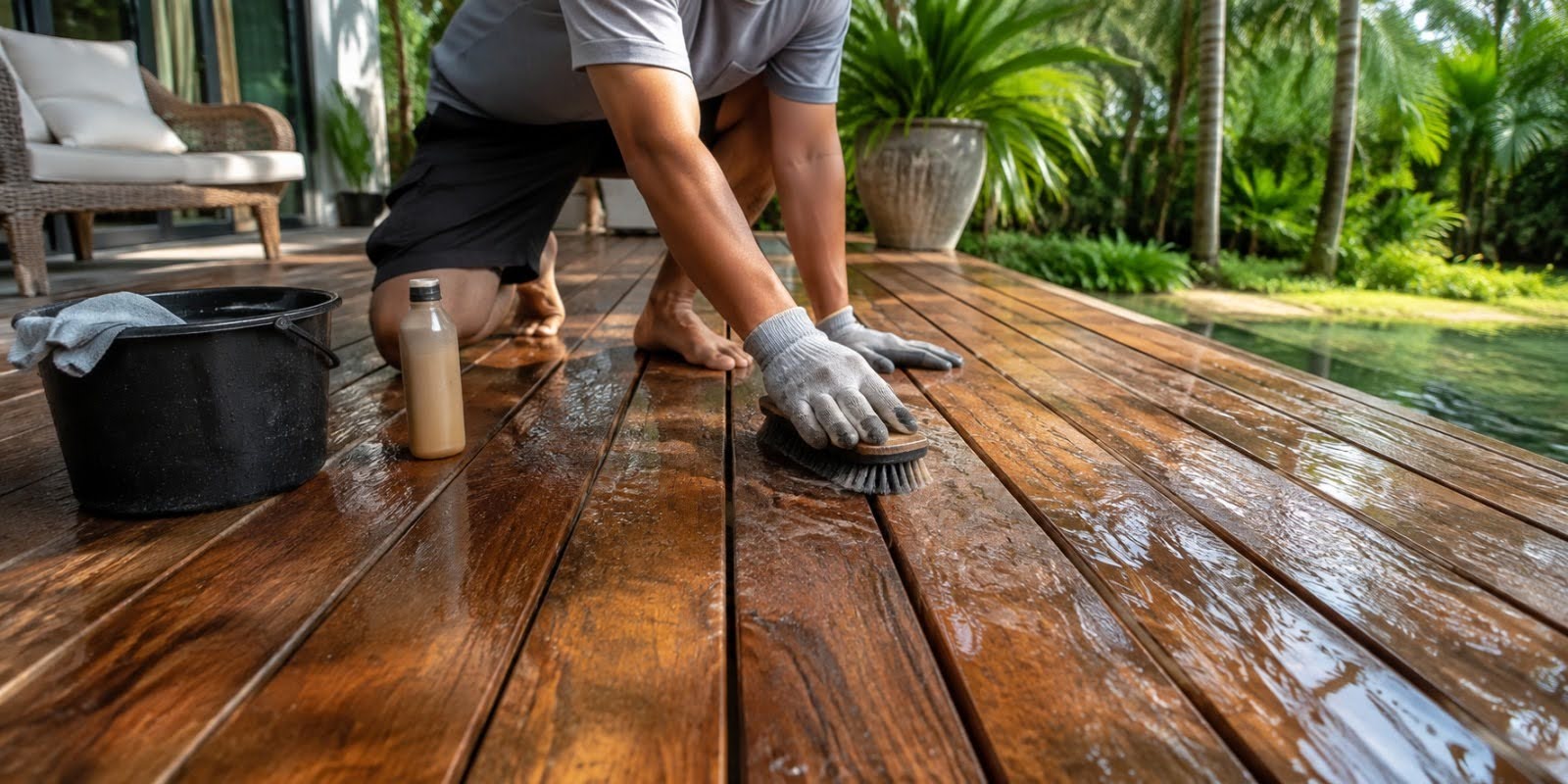
Wooden floor solutions are a preferred choice for many Singapore homes for their durability, finish, and ability to seamlessly blend in with the existing design of the home. Bearing this in mind, outdoor wood decking in Singapore requires regular cleaning, inspection and appropriate surface care because tropical conditions expose timber to high humidity, frequent rainfall and strong sunlight. A consistent maintenance routine can help manage appearance, drainage and the overall condition of the decking system.
Natural timber changes when exposed to the environment. Colour variation, surface weathering and dimensional movement can occur as wood absorbs and releases moisture.
Maintenance should therefore focus on keeping the deck clean, allowing moisture to drain effectively, identifying localised problems early and applying suitable timber treatments where appropriate.
Why Maintenance Matters
Timber maintenance helps manage the effects of weather exposure and everyday use on outdoor decking. Even durable hardwood decking should not be treated as maintenance-free.
Leaves, dirt and organic material can accumulate on the surface and between decking boards. When debris remains wet, it may keep moisture in contact with timber for longer periods.
Regular inspection also makes it easier to identify loose boards, worn finishes or blocked drainage before these conditions become more difficult to address.
Maintenance is therefore both visual and functional. It supports the appearance of the deck while helping ensure that drainage, fixings and surface conditions continue to function as intended.
Common Problems in Singapore’s Climate
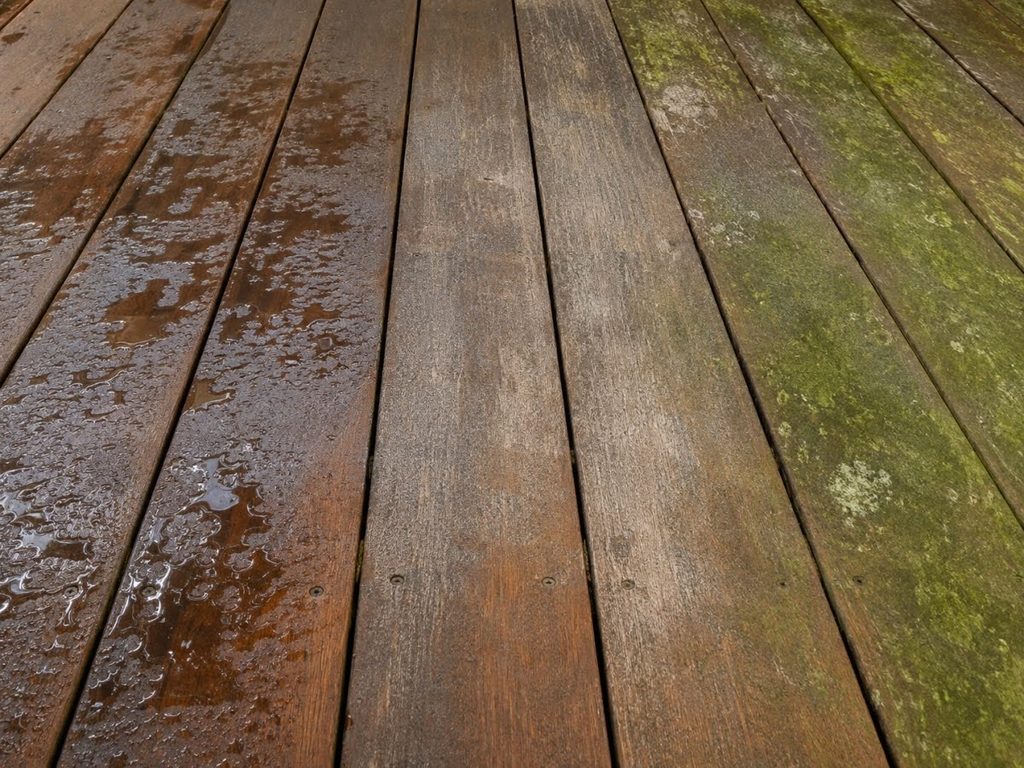
Singapore’s tropical climate creates a combination of moisture, heat and UV exposure that can affect natural timber over time. These effects are normal considerations for exterior wood rather than evidence that timber is unsuitable for decking.
Moisture Exposure
Frequent rain can repeatedly wet outdoor decking. If drainage is poor or debris accumulates beneath the deck, some areas may remain damp longer than others.
Maintaining clear drainage pathways helps reduce unnecessary moisture retention.
UV Exposure
Strong sunlight can alter the colour of natural timber and contribute to surface weathering. UV protection products may be used where appropriate, particularly when maintaining a particular appearance is important.
No coating completely prevents natural ageing, so realistic expectations should be established.
Organic Growth and Surface Contamination
Shaded and damp locations may encourage surface growth or make dirt more noticeable. Regular deck cleaning helps keep these areas under control.
Pool surrounds, garden decks and other moisture-prone locations may require more frequent inspection.
Cleaning Your Deck
Regular cleaning removes debris and surface contamination that can affect both appearance and moisture management. The correct cleaning method depends on the timber species, condition and existing finish.
Start by removing leaves, soil and loose debris with a soft broom or suitable cleaning tool. Pay attention to gaps between boards and areas around drainage points.
Where washing is required, use methods appropriate for natural timber. Excessively aggressive pressure or unsuitable chemicals can damage fibres or strip finishes.
A simple cleaning routine normally involves:
- Removing loose debris
- Checking board gaps and drainage points
- Washing with an appropriate timber-cleaning method
- Allowing the deck to dry thoroughly
- Inspecting the surface once clean
Cleaning frequency should reflect exposure. A sheltered balcony may require less frequent attention than a garden or pool deck surrounded by vegetation.
Protecting Against Moisture and UV
Protecting a timber deck from weather exposure involves good design, drainage and maintenance rather than attempting to make natural wood completely waterproof. Timber coatings and treatments can help manage surface exposure but should complement, not replace, proper installation.
Waterproof timber is sometimes used as a marketing description, but natural wood remains responsive to environmental moisture. The more important objective is to prevent water from remaining trapped around the system.
Appropriate timber coating or oil may help manage the surface finish. The product should be suitable for the timber species and intended outdoor application.
UV protection may also help slow some visible weathering. However, timber can still change colour over time, particularly in exposed areas.
Drainage remains one of the most important forms of moisture management. Drains should stay clear and accessible throughout the deck’s lifespan.
Annual Maintenance Checklist
A yearly inspection provides an opportunity to assess the overall condition of outdoor wood decking, although heavily exposed areas may require checks more often.
An annual review should consider:
- Surface cleanliness and visible weathering
- Condition of decking boards
- Loose or damaged components
- Drainage and water movement
- Areas of persistent dampness
- Condition of any existing finish
The inspection should not focus only on obvious surface defects. Changes in movement, drainage or the condition of the supporting structure may indicate that professional assessment is needed.
Maintenance records can also be useful for larger residential or commercial decks because they show what work has been completed and when treatments were last applied.
Key Signs Your Deck Needs Repair
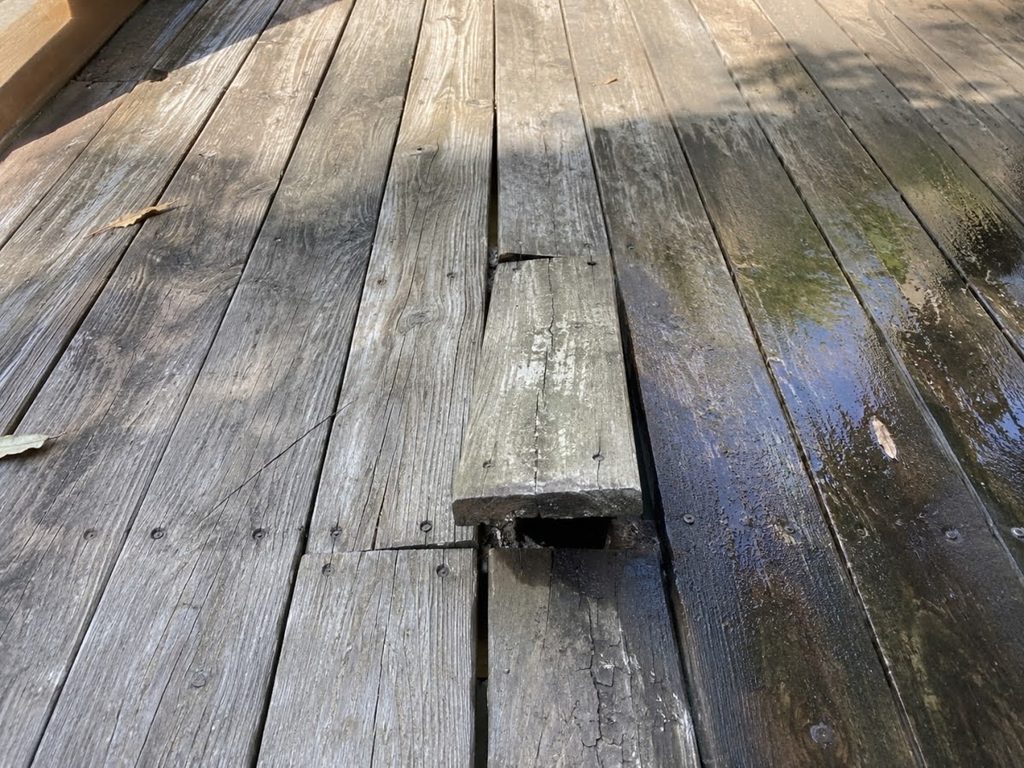
Decking may require repair when individual boards, fixings or structural components no longer perform as intended. Early intervention can prevent a localised issue from affecting a larger part of the deck.
Visible cracking should be assessed according to its extent and location because some minor surface checking can occur naturally in timber. More significant movement, instability or deterioration requires closer attention.
Other warning signs include loose boards, raised fasteners, persistent water accumulation or localised areas that remain damp long after surrounding surfaces have dried.
A change in colour alone does not necessarily indicate structural damage. Natural greying and weathering are common characteristics of exterior timber.
Professional assessment is appropriate when the cause or severity of a problem is unclear.
Professional Maintenance Tips
Professional maintenance can be useful when a deck requires more than routine cleaning or when the timber condition needs to be assessed before refinishing. The objective should be to determine the cause of any problem before applying a cosmetic treatment.
For example, repeatedly refinishing a damp area will not address an underlying drainage problem. Similarly, replacing a surface board may not resolve movement caused by a damaged substructure.
A qualified decking specialist can examine the surface, fixings, supporting system and drainage as part of the same assessment.
Where timber treatment is required, the existing finish and timber species should be considered before a new product is applied.
Frequently Asked Questions (FAQs)
Cleaning frequency depends on exposure, surrounding vegetation and usage. Decks under trees or near gardens may require more frequent cleaning because leaves and organic debris accumulate faster.
High-pressure cleaning can damage timber fibres if used incorrectly. A cleaning method suited to the timber and existing finish is generally preferable.
Natural timber should not be treated as completely waterproof. Suitable finishes can help manage surface exposure, but effective drainage and appropriate installation remain essential.
Natural timber often becomes greyer as sunlight and weather affect the surface. This colour change does not automatically indicate structural deterioration.
Replacement may be necessary when boards are significantly damaged, unstable or deteriorated. The underlying cause should also be checked before replacement.
Keeping Timber Decking Serviceable Over Time
Outdoor wood decking in Singapore performs best when maintenance is treated as an ongoing process rather than a response to visible damage. Routine cleaning, drainage checks, periodic inspections and suitable surface care can help manage the effects of tropical weather.
The appropriate maintenance approach depends on the timber, exposure and condition of the individual deck.
Plan Appropriate Care for Your Timber Deck
Maintenance needs can vary between balconies, gardens, terraces and exposed outdoor spaces. Nam Soon Decking Pte Ltd. can assess timber decking conditions and provide guidance relevant to the installed material and site.
Property owners who need advice on an existing outdoor deck can reach out to Nam Soon Decking Pte Ltd. to discuss suitable maintenance or decking requirements.