


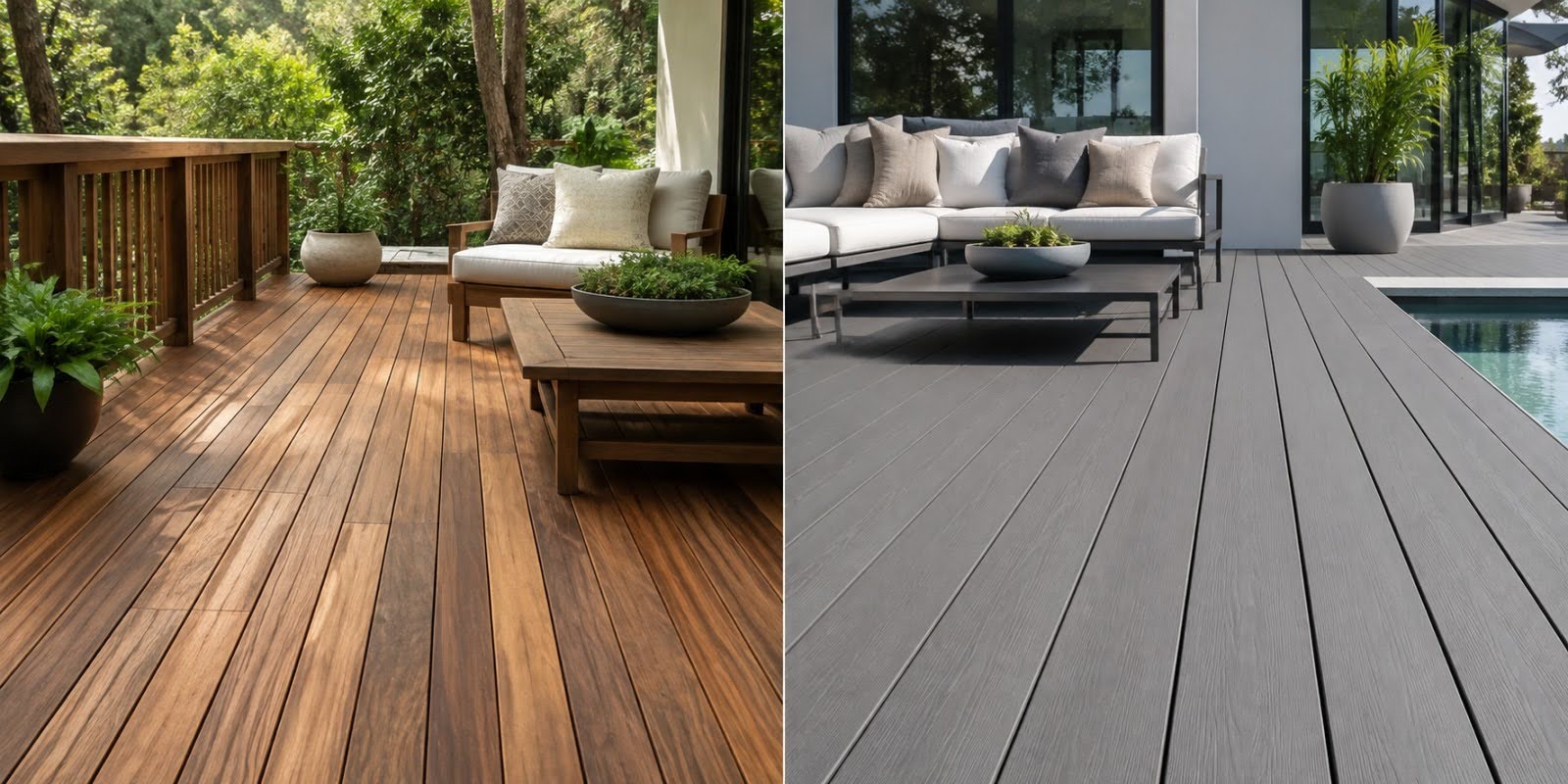
Wooden floor solutions are a popular option for many homes in Singapore. Outdoor timber decking and composite decking are two common material choices for creating usable exterior flooring in balconies, patios, gardens and other residential spaces. The better option depends on how a homeowner prioritises natural appearance, maintenance, weather exposure, durability and the intended use of the area.
Singapore’s tropical environment introduces additional considerations. High humidity, frequent rain, strong sunlight and year-round warmth mean that outdoor deck materials should be evaluated according to how they respond to moisture, UV exposure and repeated wet-and-dry cycles.
Natural timber provides the grain, colour variation and tactile qualities of real wood, while composite decking is a manufactured alternative designed to offer more uniform characteristics. Understanding these differences helps homeowners select a material that suits both the property and their expectations.
Understanding Timber and Composite Decking
Outdoor timber decking is made from natural wood boards installed over a supporting structure. Hardwood species suitable for exterior applications are commonly chosen because of their density, strength and ability to perform under outdoor conditions when properly installed and maintained.
Composite decking is manufactured from a combination of materials. Depending on the product, these may include wood fibres, polymers and additives designed to influence characteristics such as colour, surface texture and moisture resistance.
The two materials therefore differ fundamentally in composition. Timber is a natural material that changes with environmental exposure, while composite boards are manufactured to deliver a more standardised appearance and set of product characteristics.
Neither material should be treated as universally superior. Performance depends on product quality, installation, site conditions and long-term care.
Durability Comparison
Durability refers to how well a decking system remains serviceable under environmental exposure, foot traffic and normal use. Both timber and composite decking can provide durable outdoor flooring when the material is suitable for the project and the installation is properly executed.
Hardwood decking can perform well in exterior applications because suitable timber species possess natural characteristics that support outdoor use. However, the actual lifespan of a timber deck depends on timber quality, drainage, ventilation, maintenance and exposure.
Composite decking is designed to provide resistance to certain forms of moisture-related deterioration. Its durability varies between products because formulations, manufacturing quality and installation systems differ.
The comparison should therefore focus on the complete system rather than the board material alone. A durable board installed over an unsuitable substructure or in an area with poor drainage can still develop problems.
Appearance and Natural Finish
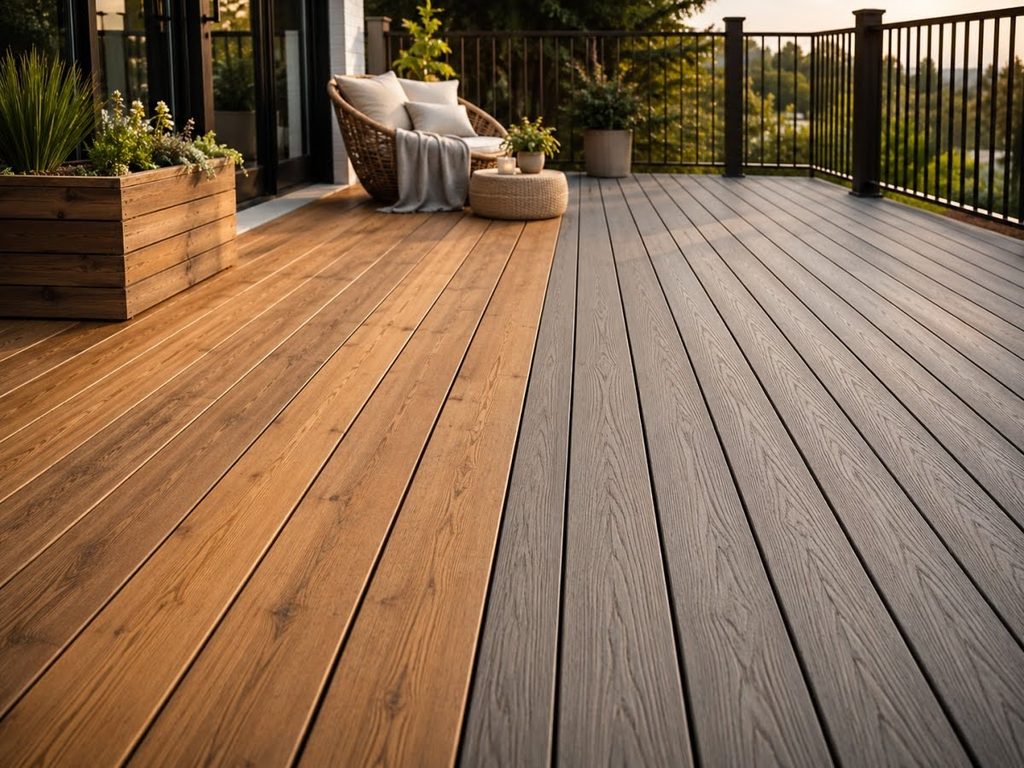
Natural timber provides genuine wood grain, colour variation and surface character that manufactured materials attempt to reproduce but cannot fully duplicate. For homeowners who prioritise a natural architectural finish, this can be an important advantage.
Each timber board is visually different. Variations in grain, tone and texture create a less uniform surface, which many property owners consider part of the appeal of wood decking.
Composite boards are generally more consistent in colour and pattern. This can suit homeowners who prefer predictable visual results across the entire deck.
Weathering also affects appearance differently. Natural timber can gradually change colour when exposed to sunlight and rain, while composite products may experience their own forms of colour or surface change depending on their formulation.
The preferred appearance is therefore largely a design decision rather than a measure of technical performance.
Maintenance Requirements
Outdoor decking requires some level of care regardless of material. Maintenance keeps the surface clean, helps preserve drainage and allows potential problems to be identified before they become more extensive.
Timber decking generally requires periodic cleaning and inspection. Depending on the desired finish and timber type, timber treatments, oils or coatings may also be applied at appropriate intervals.
Common timber maintenance tasks include:
- Removing leaves and surface debris
- Cleaning accumulated dirt
- Checking boards and fixings
- Keeping drainage paths clear
- Reapplying suitable finishes when required
Composite decking may require less surface treatment because it does not need to be finished in the same way as natural timber. It still requires cleaning, inspection and care according to the manufacturer’s guidance.
“Low maintenance” should therefore not be interpreted as “no maintenance.” Outdoor flooring remains exposed to dirt, moisture and environmental conditions throughout its service life.
Cost Considerations Without Focusing on Price Alone
The most appropriate decking material should be assessed based on whole-life requirements rather than purchase price alone. Material quality, installation complexity, maintenance expectations and potential repair requirements can all affect long-term value.
Natural timber may require periodic surface care, while composite decking can have different product and installation requirements. The relative value of each material depends on what the homeowner expects from the deck over time.
A material that requires less maintenance may suit one household, while another may prefer natural timber despite accepting a more involved maintenance routine.
Rather than selecting a product solely because it appears cheaper initially, homeowners should consider how material performance, maintenance and expected use fit their priorities.
Which Material Suits Singapore’s Climate?
Both appropriate hardwood and suitable composite decking products can be used in Singapore, provided the system accounts for tropical environmental conditions. Climate suitability depends as much on installation and drainage as it does on the material itself.
Frequent rainfall means the deck needs to allow water to leave the area efficiently. Moisture should not remain unnecessarily trapped around boards or structural components.
Strong sunlight can also affect surface temperatures and appearance. Natural timber and composite materials respond differently to heat and UV exposure, so product-specific characteristics should be reviewed.
Humidity adds another consideration because natural timber can absorb and release moisture from the surrounding air. Correct board spacing and installation therefore matter for timber decks.
For exposed areas, the following factors deserve particular attention:
- Drainage beneath and around the deck
- Adequate board spacing
- Suitable substructure design
- Material compatibility with outdoor exposure
- Realistic maintenance requirements
A sheltered balcony may place fewer demands on a decking system than an exposed garden, rooftop or pool area, so site conditions should always influence the final selection.
Choosing the Best Option for Your Home
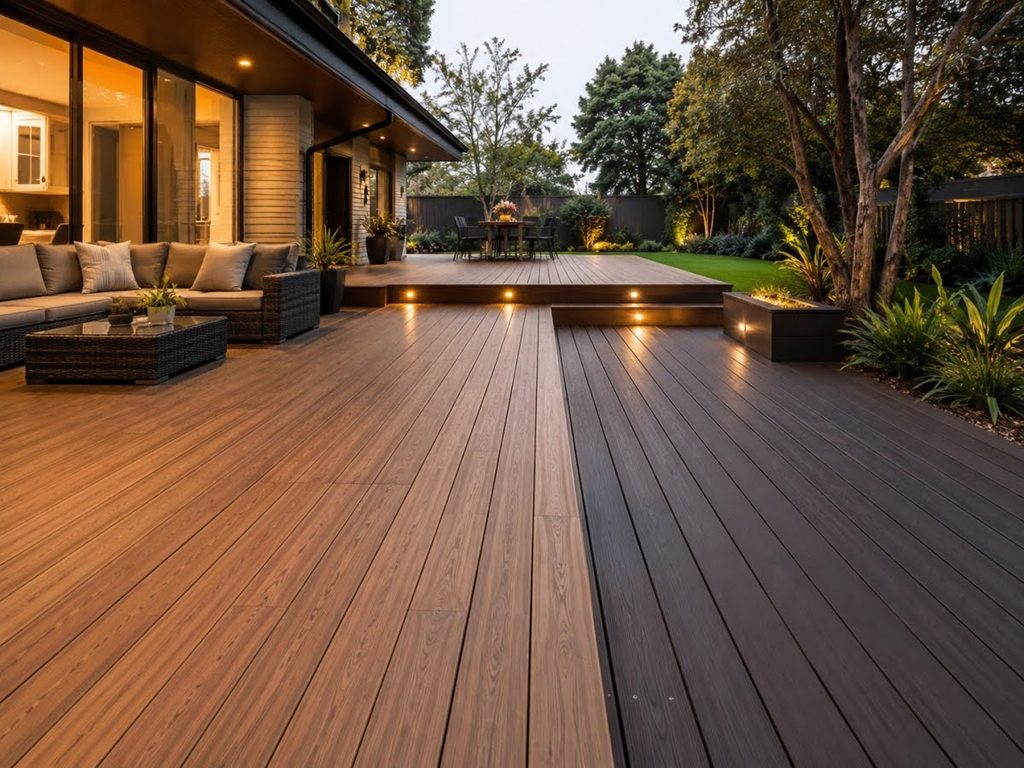
The best material is the one that matches the property’s conditions and the homeowner’s expectations for appearance, maintenance and use. There is no single answer that applies to every outdoor decking Singapore project.
Outdoor timber decking may suit homeowners who prioritise natural materials, distinctive wood grain and the ability to maintain or refinish the surface over time.
Composite decking may appeal to homeowners who prefer a more uniform appearance and different maintenance requirements.
The decision should also account for where the deck will be installed. A pool surround, balcony, garden and patio all have different exposure and drainage considerations.
Before selecting a material, homeowners should assess the complete decking system, including the board, substructure, fixings, drainage strategy and maintenance plan.
Frequently Asked Questions (FAQs)
Yes, suitable hardwood can be used for outdoor timber decking in Singapore when material selection, installation and maintenance account for the tropical climate. Drainage and ventilation are particularly important in areas exposed to frequent rainfall.
This depends, because decking lifespan depends on product quality, installation, environmental exposure and maintenance. Different timber species and composite products can have substantially different performance characteristics.
Natural timber provides genuine grain, colour variation and surface texture because it is made from solid wood. Composite decking is manufactured and can imitate wood, but its appearance is generally more uniform.
Timber generally requires more surface care if the homeowner wants to manage its colour and finish. Composite decking still requires cleaning and routine inspection, even if surface treatments are less commonly required.
Both may be suitable depending on the specific product and installation system. Wet-area applications require careful consideration of drainage, surface condition and maintenance.
Choosing Decking With Long-Term Use in Mind
Outdoor timber decking and composite decking offer different combinations of appearance, maintenance and material characteristics. Timber provides the qualities of natural wood, while composite products provide a manufactured alternative with more consistent characteristics.
For Singapore homes, the most important decision is not simply timber versus composite. The material should be matched to the location, environmental exposure, drainage conditions and way the space will be used.
Discuss the Right Decking Material for Your Property
Homeowners comparing timber and composite options can benefit from assessing the actual site before selecting a system. Nam Soon Decking Pte Ltd. can provide information on timber decking options and relevant installation considerations for different outdoor environments.
To discuss the requirements of a balcony, patio, garden or other outdoor area, homeowners can get in touch with Nam Soon Decking Pte Ltd. today for project-specific guidance.