


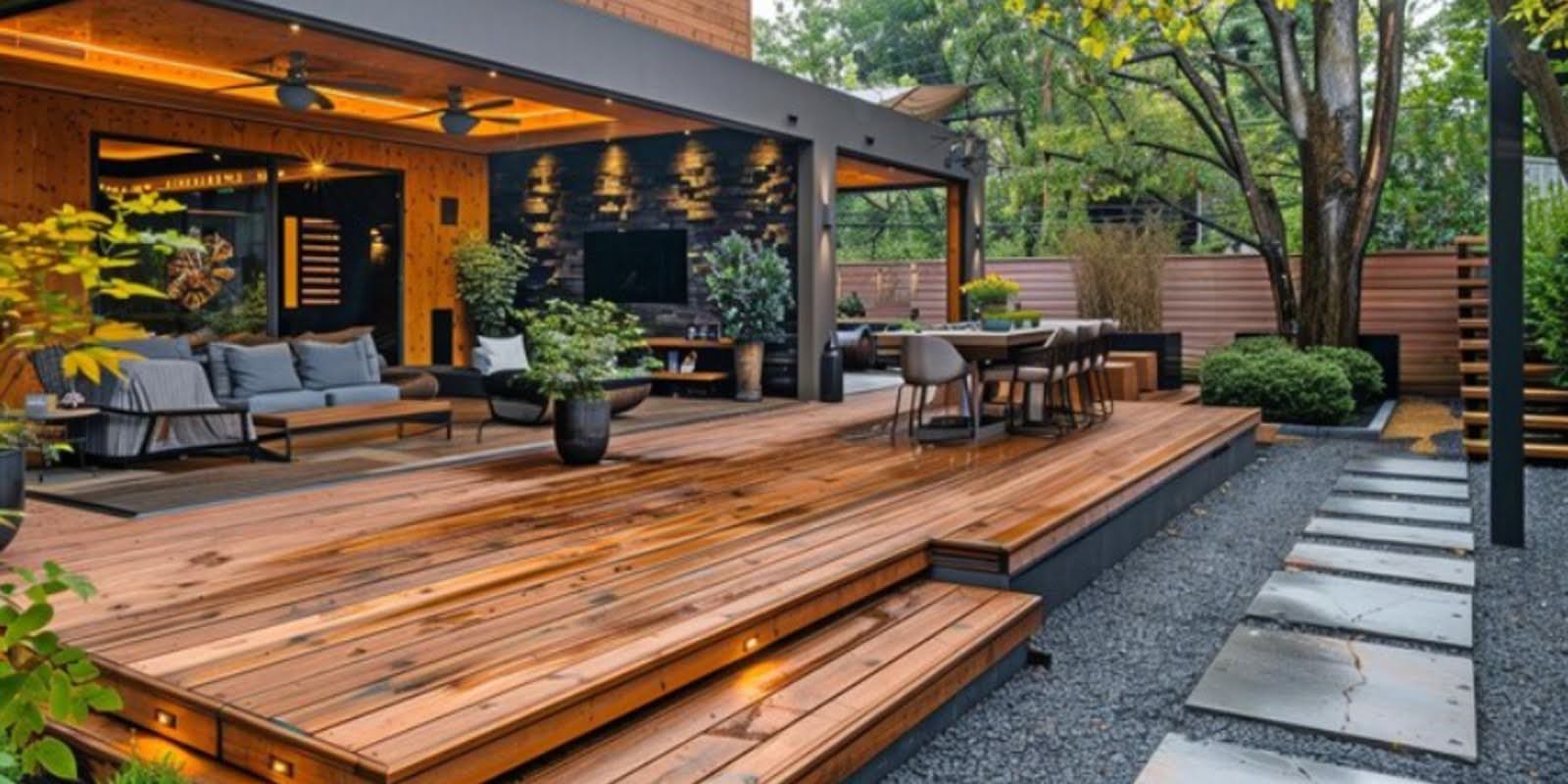
Outdoor decking is a constructed surface designed to create usable exterior flooring for spaces such as balconies, patios, gardens, pool surrounds, terraces and commercial outdoor areas. In Singapore, outdoor decking must account for a tropical climate characterised by high humidity, frequent rainfall, strong sunlight and year-round warm temperatures.
Choosing suitable outdoor decking therefore involves more than selecting a material based on appearance. Property owners need to consider the decking material, structural system, drainage, ventilation, installation method, intended use and long-term maintenance requirements.
Timber remains one of the established materials for outdoor decking because it provides a natural appearance and can be used across residential, commercial and landscape applications. Other options, including composite products, may suit projects with different design or maintenance requirements.
This detailed guide explains the main outdoor decking materials, product formats, applications, installation considerations and maintenance practices relevant to properties in Singapore.
What Is Outdoor Decking?
Outdoor decking is an exterior flooring system installed over a supporting structure to provide a stable and usable surface outside a building. Unlike conventional indoor flooring, decking is designed to function under direct or partially sheltered exposure to weather and changing environmental conditions.
A typical decking system consists of surface boards or panels fixed over joists, supports or another substructure. The space underneath the finished surface can assist with drainage and ventilation when the system is designed and installed correctly.
Outdoor decking can be installed in many locations, including:
- Balconies and terraces
- Patios and gardens
- Pool surrounds
- Rooftop areas
- Walkways and landscape spaces
- Commercial outdoor areas
The requirements differ between projects. A private balcony, for example, may have different loading, drainage and access considerations from a large commercial terrace or public walkway.
Why Outdoor Decking Is Popular in Singapore
Outdoor decking is commonly used in Singapore because it can convert exterior areas into functional extensions of a property while accommodating different architectural and landscape designs. It is particularly suitable where a raised or defined outdoor floor surface is required.
For residential properties, decking can help create usable areas for seating, dining or general outdoor activities. Balcony decking and patio decking can also provide visual continuity between interior spaces and outdoor areas when materials and levels are planned appropriately.
Commercial properties may use decking for restaurants, hospitality spaces, communal areas, landscaped developments and recreational facilities. In these settings, material durability, maintenance access and expected foot traffic become particularly important.
Singapore’s climate also influences material selection. Frequent rain and humidity mean outdoor flooring should be assessed for moisture exposure, drainage, dimensional movement and surface condition rather than appearance alone.
Types of Outdoor Decking Materials
Outdoor decking materials generally fall into several categories, with timber and composite systems among the most familiar options. Each material behaves differently when exposed to moisture, sunlight, foot traffic and routine maintenance.
Natural Timber Decking
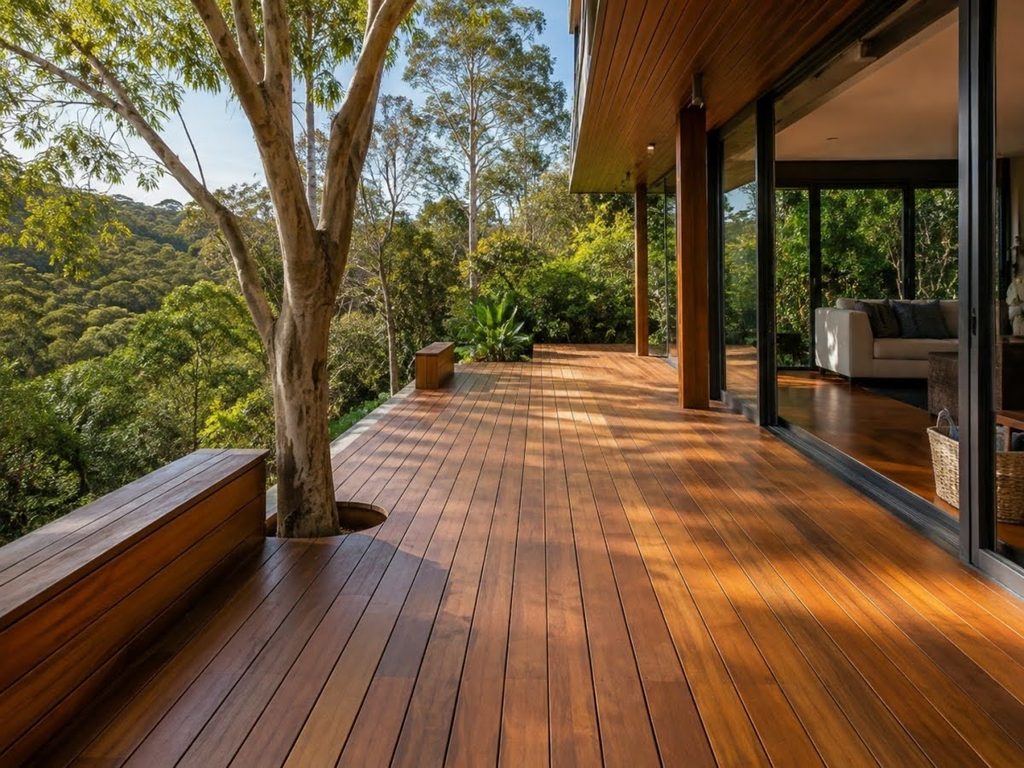
Natural timber decking uses solid wood boards manufactured from timber species selected for outdoor applications. Hardwood decking is often considered for exterior use because suitable hardwood species can offer strength, density and natural durability.
Chengal timber and Merbau timber are examples of hardwoods associated with outdoor applications in Southeast Asia. Their suitability for a specific project still depends on timber quality, treatment, installation and maintenance.
Natural timber changes over time. Exposure to sunlight and weather can alter its colour and surface appearance, making periodic inspection and maintenance an important part of ownership.
Composite Decking
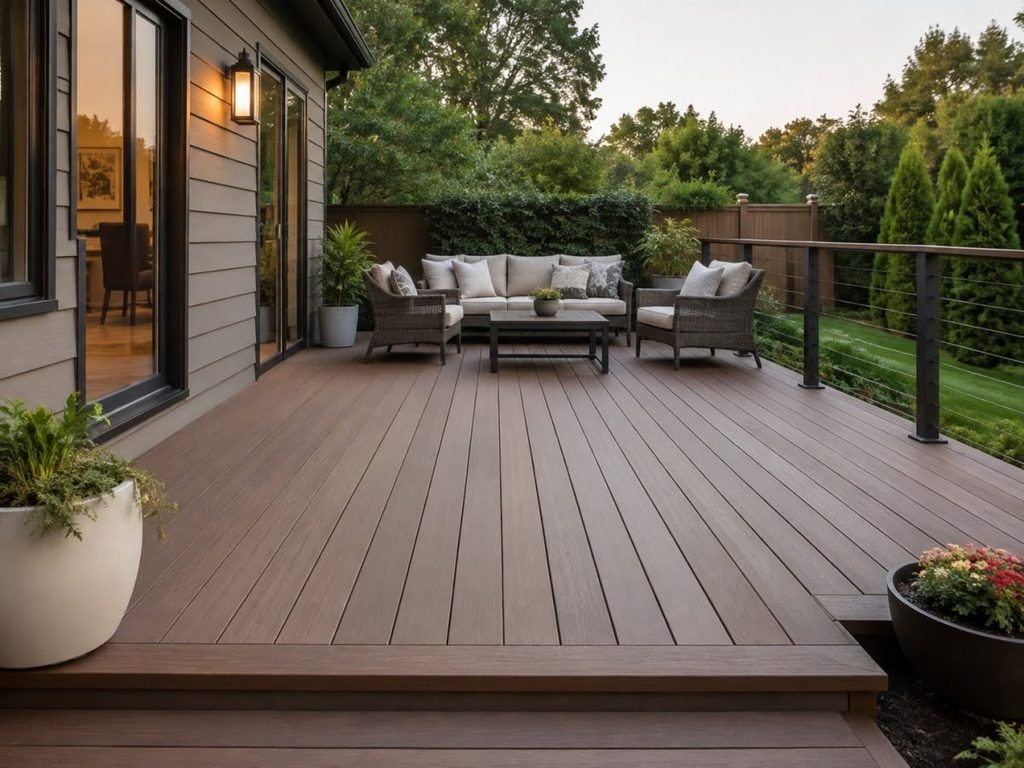
Composite decking is manufactured from a combination of materials rather than being cut directly from solid timber. Depending on the product, it may contain wood fibres, polymers and other additives.
Composite systems are designed to provide relatively consistent dimensions and finishes. Their performance varies by product formulation, manufacturing quality, installation system and exposure conditions.
The term “composite” covers a broad category, so specifications should be reviewed for the actual product rather than assuming that all composite decking performs in the same way.
Other Outdoor Flooring Options
Outdoor spaces may also use tiles, stone, concrete or other flooring materials. These are not technically decking in every application because they may be installed directly onto a prepared substrate rather than over a decking substructure.
The appropriate option depends on drainage requirements, desired appearance, structural conditions, accessibility and the intended use of the space.
Timber vs Wood vs Composite Decking
Timber decking and wood decking generally describe the same broad category of decking made from natural wood, while composite decking refers to manufactured boards containing multiple materials. The distinction matters because natural timber and composite products respond differently to weather, maintenance and ageing.
In everyday usage, “timber” is often used to describe wood that has been processed for construction or building applications. Therefore, outdoor wood decking Singapore searches and timber decking searches may refer to very similar products.
The main differences can be summarised as follows:
| Consideration | Natural Timber | Composite Decking |
| Material | Natural wood | Manufactured composite |
| Appearance | Natural grain and variation | More uniform finish |
| Ageing | Colour and surface can change naturally | Depends on product formulation |
| Maintenance | Periodic care generally required | Requirements vary by manufacturer |
| Repair | Individual boards may be serviceable or replaceable depending on system | Depends on system and product |
| Heat and weather response | Depends on timber species and installation | Depends on product formulation |
Neither category is automatically suitable for every project. Selection should be based on environmental exposure, expected usage, maintenance expectations and the technical characteristics of the chosen product.
Outdoor Decking Products Explained
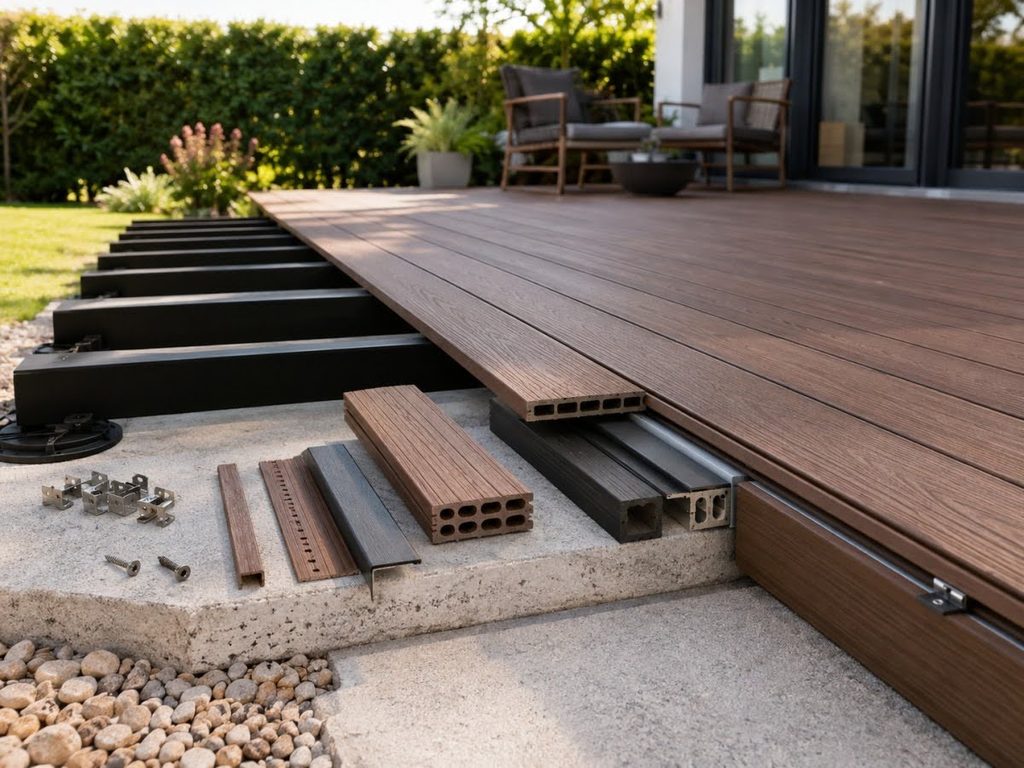
Outdoor decking products include more than the visible boards installed on the finished surface. A functioning decking system can include boards, supporting structures, fixing components, finishing materials and accessories.
Decking Boards
Decking boards form the visible walking surface. Their dimensions, profile, timber species and surface treatment affect appearance, installation and performance.
Board selection should account for expected foot traffic and environmental exposure. Consistency of timber quality is also important because natural wood can vary in density, grain and appearance.
Supporting Structure
The substructure supports the decking surface and creates the framework to which boards are fixed. Depending on the system, this may include joists, battens, pedestals or other support components.
The substructure is particularly important because problems below the visible surface can affect drainage, board movement and structural stability.
Fixings and Fasteners
Fixings secure decking boards to the supporting system. The appropriate fixing method depends on the decking design, board profile and manufacturer or installer requirements.
Exterior fasteners also need to be appropriate for their environment. Moisture exposure and material compatibility should be considered when selecting components.
Finishes and Protective Treatments
Some timber decking products use coatings, oils or other treatments to help manage appearance and exposure. These products do not remove the need for maintenance.
Finishes should be compatible with the timber species and intended environment. Application requirements and maintenance intervals can vary.
Choosing the Right Outdoor Decking for Your Property
The right outdoor decking is the system that matches the site’s environmental conditions, intended use, structural requirements and maintenance expectations. Selecting solely by colour or appearance can overlook factors that determine long-term performance.
1. Assess the Location
The first consideration is where the deck will be installed. A fully exposed rooftop deck experiences different conditions from a sheltered balcony.
Sunlight, rainfall, ventilation and surrounding vegetation can all influence the decking environment.
2. Consider How the Area Will Be Used
A lightly used residential balcony has different requirements from a restaurant terrace or communal area with frequent foot traffic. Usage influences material selection, surface design and maintenance planning.
Pool decking requires additional consideration because the surface is regularly exposed to water. Slip characteristics, drainage and appropriate maintenance become especially relevant in wet areas.
3. Evaluate Drainage
Effective drainage helps prevent water from remaining around the decking system longer than necessary. This is particularly important in Singapore, where heavy rainfall can occur throughout the year.
The underlying area should allow water to move towards appropriate drainage points rather than becoming trapped beneath the deck.
4. Consider Maintenance Expectations
Natural timber requires ongoing care if the owner wants to manage its appearance and condition over time. Maintenance requirements should therefore be understood before installation.
A material should not be selected on the assumption that an outdoor deck will remain unchanged without inspection or care.
5. Review the Complete System
Decking should be assessed as a complete system rather than as surface boards alone. Substructure, fixings, drainage, board spacing and installation quality all contribute to performance.
A decking supplier or decking contractor should be able to explain how these components work together for the proposed application.
Residential vs Commercial Outdoor Decking
Residential and commercial outdoor decking use similar materials, but project requirements can differ considerably because of usage patterns, scale and operational demands.
Residential Outdoor Decking
Residential decks are commonly installed on balconies, patios, gardens, pool surrounds and private terraces. Design priorities often include appearance, comfort, compatibility with the home and manageable maintenance.
Access is another practical consideration. Decking installed on apartment balconies or constrained areas may require installation methods suited to limited working space.
Commercial Outdoor Decking
Commercial decks may serve hospitality venues, offices, retail environments, landscape projects or common facilities. These spaces can experience higher and more consistent foot traffic.
Commercial projects may therefore place greater emphasis on durability, maintenance access, safety considerations and coordination with other construction works.
For both settings, the correct material should be matched to the actual project rather than selected purely because it has been used successfully elsewhere.
Outdoor Decking Installation Process
Outdoor decking installation involves preparing the site, establishing a suitable support system, installing the decking boards and checking the completed surface. Correct installation is important because even suitable decking materials can perform poorly when the supporting system or drainage is inadequate.
1. Site Assessment
Installation begins with an assessment of the existing surface and surrounding conditions. The installer needs to identify drainage points, available height, access restrictions and potential obstacles.
Measurements are also taken so the decking layout can be planned efficiently.
2. Layout and Substructure Planning
The support structure is planned according to the decking system and site conditions. Appropriate spacing and alignment help distribute loads and support the boards.
The design should also preserve access to drainage points or other building components where necessary.
3. Drainage and Ventilation Considerations
Outdoor decks need a strategy for water movement. Board spacing and the area beneath the deck should allow rainwater to drain appropriately.
Ventilation can also help manage moisture around timber components. Completely trapping moisture beneath a deck can contribute to deterioration.
4. Installing the Decking Boards
Boards are positioned and fixed according to the selected system. Timber naturally responds to environmental moisture, so installation should accommodate the characteristics of the material.
Board alignment and spacing affect both appearance and function.
5. Inspection and Finishing
The completed deck should be checked for stability, alignment, surface condition and finishing details. Drainage areas should remain accessible and functional.
Where a protective finish is specified, it should be applied according to the requirements of the timber and finishing product.
Maintaining Outdoor Timber Decking
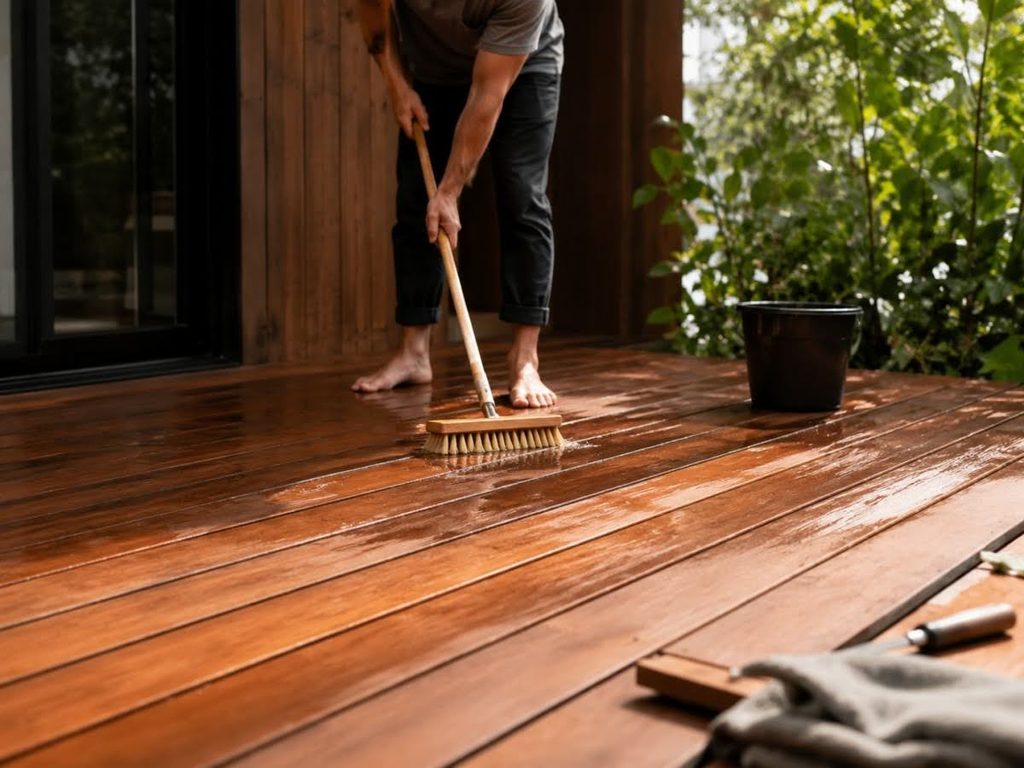
Outdoor timber decking requires periodic cleaning, inspection and appropriate surface care to manage its condition under weather exposure. Maintenance needs vary according to timber species, location, finish and usage.
Routine Cleaning
Routine cleaning removes dirt, leaves and organic debris that can accumulate on the surface. Debris should also be prevented from obstructing drainage areas.
Cleaning methods should be appropriate for the timber and finish. Aggressive techniques can damage the surface when used incorrectly.
Periodic Inspection
Decking should be inspected periodically for loose components, surface deterioration, damaged boards or areas where water is not draining correctly.
Early identification of localised problems can make maintenance easier than waiting until damage becomes extensive.
Managing Natural Weathering
Timber exposed to sunlight and rain naturally changes appearance. Colour variation or greying does not necessarily mean that the timber has structurally failed.
Owners who want to retain a particular appearance may need suitable cleaning and finishing treatments at intervals appropriate to the product and environment.
Wet and Shaded Areas
Decks in shaded or consistently damp locations may require additional attention because surfaces can remain wet for longer periods.
Keeping the area clean and maintaining drainage can help manage these conditions. Surface condition should also be monitored where slip resistance is important.
Common Mistakes When Choosing Outdoor Decking
Common decking problems often begin with decisions made before installation rather than with the material alone. Understanding these issues can help property owners evaluate a proposed decking system more effectively.
Choosing Based Only on Appearance
Colour and grain are important design considerations, but they do not indicate whether a material suits the site’s environmental conditions.
Durability, maintenance requirements and installation compatibility should be assessed at the same time.
Ignoring the Substructure
The visible decking surface receives most of the attention, but the supporting structure is fundamental to the system.
An unsuitable or poorly installed substructure can affect stability, drainage and long-term performance.
Overlooking Drainage
Water should not be allowed to remain trapped around outdoor decking unnecessarily. Drainage should therefore be considered during design rather than treated as a later correction.
This is especially relevant for exposed decks in Singapore’s high-rainfall environment.
Assuming Decking Is Maintenance-Free
Outdoor materials are continuously exposed to environmental conditions. Even materials marketed as relatively low-maintenance still require cleaning and inspection.
Maintenance expectations should be understood before selecting the product.
Selecting a Contractor Without Reviewing Technical Experience
A decking contractor should understand the behaviour of the selected material and the installation requirements of the system.
Relevant project experience can be particularly important for complex locations such as pools, rooftops, commercial spaces and landscape structures.
Why Consider Nam Soon Timber for Outdoor Decking?
Nam Soon Timber provides outdoor decking solutions that include timber products and decking systems for different exterior applications. Selecting a specialist familiar with timber allows material characteristics, installation requirements and maintenance considerations to be assessed as parts of the same project.
For timber outdoor decking, the relationship between the material and installation system is important. Timber species, board dimensions, fixing methods, supporting structures and environmental exposure can influence how a deck performs over time.
Property owners considering Nam Soon Timber should evaluate the proposed material and system according to their project’s actual requirements. Relevant factors include the installation location, intended use, environmental exposure, maintenance expectations and existing site conditions.
Frequently Asked Questions (FAQs)
There is no single material that is best for every outdoor decking project. Suitable choices depend on weather exposure, intended use, maintenance expectations, design preferences and the existing site. Natural hardwood and composite products each have characteristics that may suit different applications.
Suitable timber species can be used for outdoor decking in Singapore when the timber, design, installation and maintenance are appropriate for the environment. High humidity and frequent rainfall make drainage, ventilation and periodic maintenance particularly important.
Timber decking and wood decking usually refer to the same broad category of natural wood decking. “Timber” generally describes wood prepared for construction or building applications, while "wood" is the broader everyday term.
Outdoor decking can be installed on many balconies when site conditions allow it. The existing surface, available height, drainage, access and building requirements should be assessed before installation.
Timber can be used for pool decking when the selected material and system are appropriate for wet conditions. Drainage, surface condition, maintenance and slip considerations should be included in the design.
Yes. Outdoor timber decking generally requires cleaning, periodic inspection and appropriate surface care. The frequency depends on exposure, timber species, finish, usage and the appearance the owner wants to maintain.
There is no universal lifespan because timber deck performance depends on timber species, quality, installation, environmental exposure and maintenance. Appropriate material selection and correct installation can help support longer service life.
Property owners should review relevant decking experience, proposed materials, installation methodology, drainage planning and maintenance guidance. For more complex projects, examples of similar completed work can also help assess suitability.
Creating an Outdoor Deck That Performs Over Time
Outdoor decking can provide a practical exterior flooring solution for residential, commercial and landscape spaces when the material and installation system are matched to the site. In Singapore, rainfall, humidity, sunlight, drainage and maintenance requirements should be considered from the beginning of the project.
Natural timber, composite decking and other outdoor flooring materials each have different characteristics. A successful deck therefore depends on informed material selection, an appropriate supporting system, proper installation and realistic long-term maintenance.
Discuss Your Outdoor Decking Requirements
Every outdoor decking project has different site conditions, usage requirements and material considerations. Nam Soon Decking Pte Ltd. can assess these factors when planning a suitable decking system for a residential or commercial property.
Property owners who are evaluating a new deck or replacing an existing outdoor surface can contact Nam Soon Decking Pte Ltd. to discuss the site, intended application and relevant decking options.