


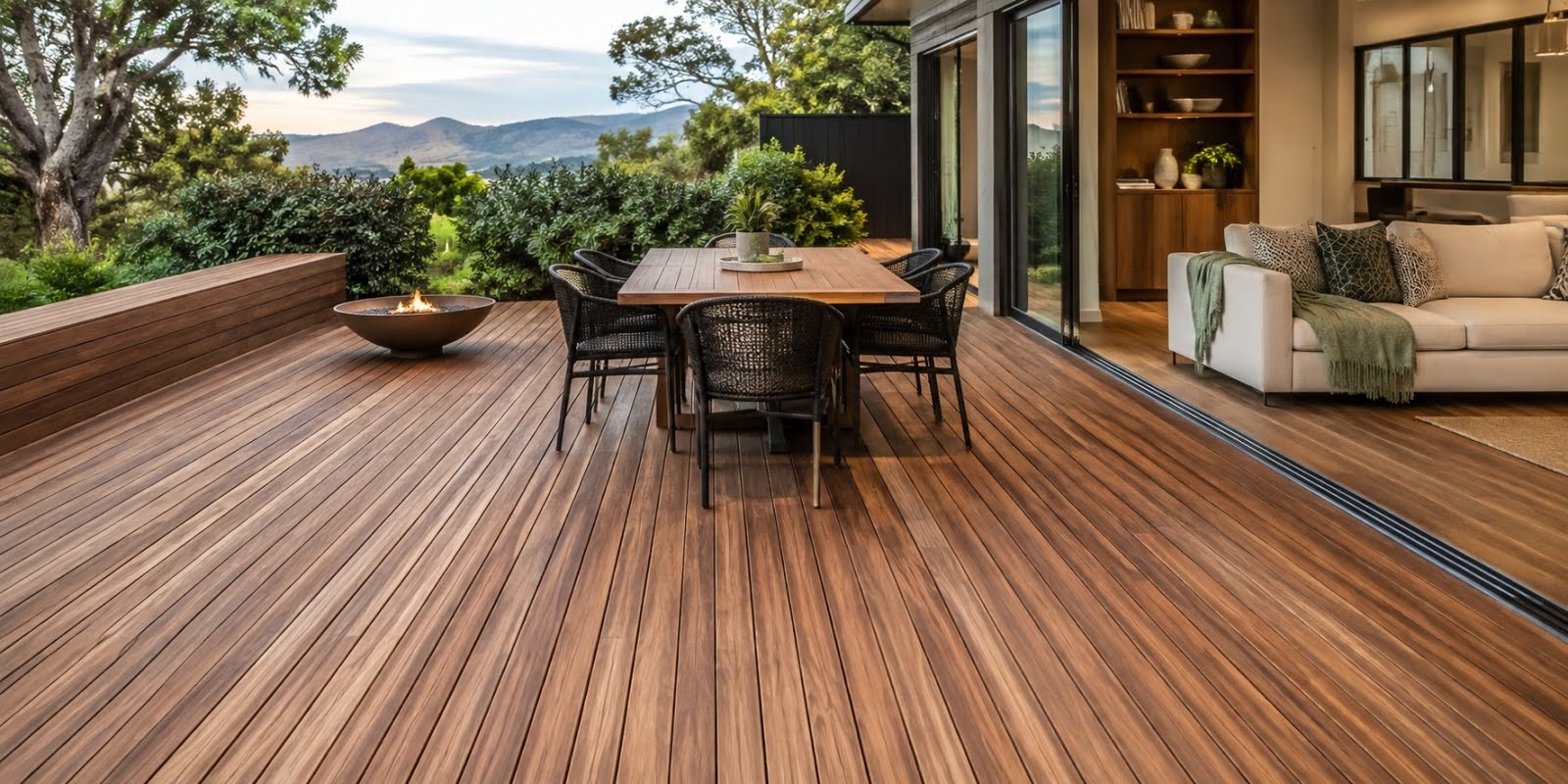
Wooden floor solutions are used in many homes across Singapore. Timber decking is an outdoor flooring system made from natural wood boards installed over a supporting structure. In Singapore, timber decking is used for balconies, patios, gardens, terraces, pool surrounds, walkways and commercial outdoor areas where a natural wood surface is required.
A timber deck is more than a collection of decking boards, as its performance depends on timber species, board quality, substructure design, fixing method, drainage, ventilation, installation workmanship and ongoing maintenance.
Singapore’s tropical conditions make these factors particularly relevant. Frequent rainfall, high humidity, strong sunlight and year-round warm temperatures expose exterior timber to regular changes in moisture and environmental conditions.
Understanding how timber decking works as a complete system allows property owners, designers and project teams to make more informed decisions about materials, installation and long-term care.
What Is Timber Decking?
Timber decking is a constructed flooring surface that uses natural timber boards supported above an underlying surface by joists, battens or another substructure. The resulting system creates a usable exterior floor while allowing space underneath for support, drainage and, where appropriate, ventilation.
Timber decking differs from conventional timber flooring because it is intended for outdoor or semi-outdoor environments. The material and installation method therefore need to account for moisture, sunlight and changing environmental conditions.
A typical timber decking system may include several components:
- Natural timber decking boards
- Supporting joists or substructure
- Appropriate fixing components
- Board spacing for the selected system
- Surface finishes or treatments where required
The performance of the finished deck depends on how these elements work together rather than on the timber boards alone.
Why Timber Decking Is Suitable for Singapore
Timber decking can be suitable for Singapore because appropriate timber species can provide the strength, durability and natural appearance required for outdoor applications. Successful use, however, depends on matching the timber and installation system to tropical environmental conditions.
Singapore experiences high humidity throughout the year and frequent heavy rainfall. Timber is a natural material that responds to environmental moisture, making material selection, board spacing, ventilation and drainage important considerations.
Direct sunlight also affects exterior timber. Surface colour can change with weather exposure, while repeated wetting and drying can influence the condition of the boards over time.
A timber deck should therefore be designed for its actual exposure. A sheltered balcony does not experience exactly the same conditions as an exposed pool deck, rooftop terrace or garden walkway.
Types of Timber Used for Decking
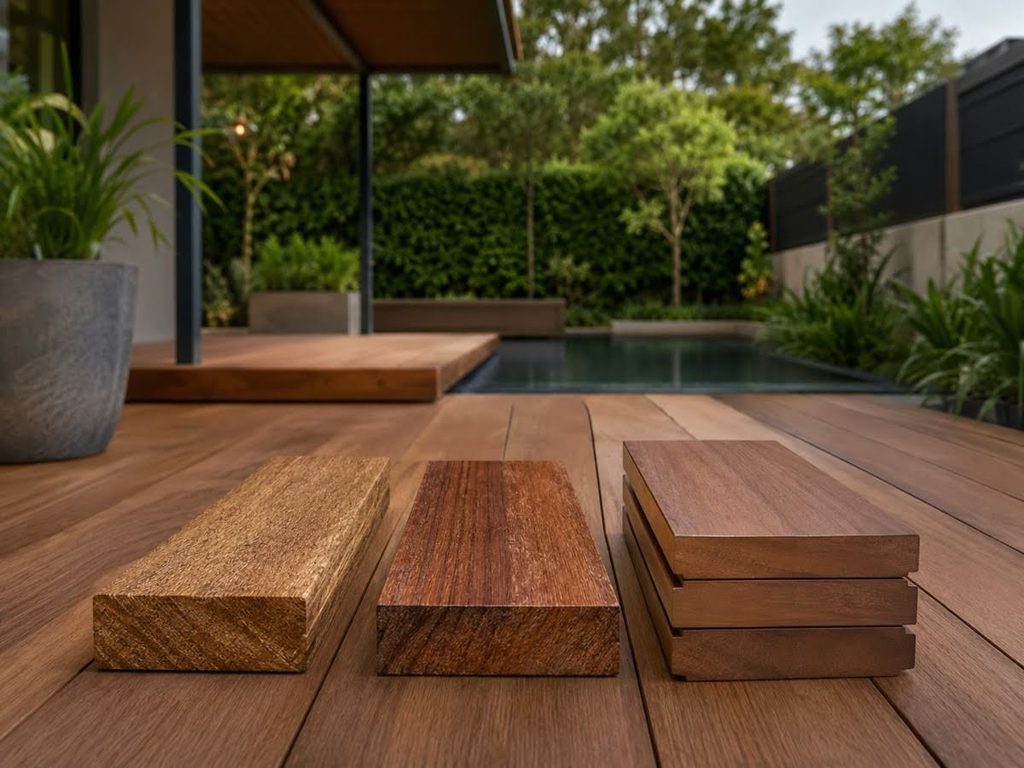
Timber used for decking generally includes hardwood species selected for their structural and durability characteristics. The appropriate species depends on the project, environmental exposure, available product specifications and desired appearance.
Hardwood Decking
Hardwood decking is produced from dense timber species that are commonly used where strength and durability are required. Tropical hardwoods are familiar materials for outdoor construction throughout Southeast Asia.
Density alone does not determine whether timber is suitable for a deck. Timber quality, moisture condition, processing, installation and maintenance also influence performance.
Chengal Timber
Chengal is a tropical hardwood associated with structural and outdoor applications in Southeast Asia. It is valued for characteristics that can make suitable grades useful in demanding exterior environments.
A Chengal timber deck should still be evaluated according to the grade and quality of the actual material supplied. Species name alone does not guarantee identical performance across all boards.
Merbau Timber
Merbau is another tropical hardwood used for flooring and decking applications. It has a distinctive appearance and physical characteristics that can make it suitable for exterior applications when correctly specified.
As with other natural materials, colour and grain can vary between boards. This variation is part of the appearance of natural timber rather than a manufacturing defect.
Other Timber Species
Other hardwood species may also be used depending on availability, project requirements and technical specifications. A timber deck supplier should be able to explain the characteristics and intended applications of the proposed species.
Material selection should be based on verified characteristics rather than assuming that all hardwood performs identically.
Chengal Timber and Other Hardwood Options
Chengal and other hardwood species differ in density, grain, colour, natural durability and response to environmental conditions. These differences affect both the appearance of a deck and the way it should be installed and maintained.
Chengal has a long history of use in regional construction and outdoor applications. When appropriate material is selected and installed correctly, it can be used for residential and commercial decking projects.
Merbau and other hardwoods provide alternatives with different visual and physical characteristics. Project teams should compare timber options according to practical criteria rather than species reputation alone.
Useful selection criteria include:
- Suitability for exterior exposure
- Timber quality and consistency
- Dimensional characteristics
- Intended level of foot traffic
- Maintenance requirements
- Compatibility with the proposed decking system
The source and quality of the timber are also relevant. Natural timber varies, making material inspection and appropriate specification important parts of procurement.
Timber Floor Decking Applications
Timber floor decking can be used across residential, commercial, hospitality and landscape settings where an elevated or defined outdoor flooring surface is required. The design and installation requirements should reflect the way the area will be used.
Balconies
Balconies are common applications for timber decking because decking can create a defined exterior floor over an existing surface. Available height and drainage access need to be assessed before installation.
Apartment and condominium balconies may also have building-specific requirements that should be considered before work begins.
Patios and Gardens
Timber decking can create seating, dining and circulation areas within gardens and patios. The supporting system should account for the condition of the underlying ground or constructed surface.
Landscape environments can expose decking to leaves, soil and persistent moisture, making cleaning and drainage particularly important.
Pool Surrounds
Timber can be used around swimming pools when the species, installation and surface condition are suitable for the application.
Pool areas require careful attention to drainage and wet-surface conditions. Maintenance should also account for regular water exposure.
Rooftop Terraces
Rooftop timber flooring is typically exposed to substantial sunlight and rainfall. Drainage outlets and waterproofing systems should remain functional and accessible.
Decking should not be designed in a way that unnecessarily obstructs inspection or maintenance of the underlying building elements.
Commercial and Hospitality Spaces
Restaurants, hotels, offices and other commercial developments may use timber decking for outdoor guest or communal areas.
Higher foot traffic and operational requirements can affect material selection, inspection frequency and maintenance planning.
Wood Decking vs Timber Decking
Wood decking and timber decking generally refer to the same type of natural wood outdoor flooring. The difference is mainly terminology rather than a separate material category.
“Wood” is a broad everyday term for material derived from trees. “Timber” commonly refers to wood that has been processed or prepared for construction and building applications.
As a result, searches for wood decking Singapore and timber decking Singapore may describe essentially the same product requirement. In both cases, buyers should focus on the timber species, quality, board profile, installation system and intended application.
The distinction becomes more important when comparing natural timber with manufactured alternatives such as wood-plastic composite decking. Composite products are not solid natural timber even when they contain wood fibres or are designed to resemble wood.
Timber Deck Installation Process
Timber decking installation is the process of preparing the site, constructing or positioning the supporting system, laying the decking boards and completing the required finishing work. Each stage affects the stability, drainage and long-term behaviour of the deck.
1. Site Assessment
The first step is to assess the area where the timber deck will be installed. Existing levels, drainage points, available height, access and environmental exposure should be identified.
Measurements allow the installer to determine the approximate material requirements and plan the deck layout.
2. Planning the Substructure
The substructure provides support beneath the decking boards. Its design depends on the decking system, board dimensions and site conditions.
Support spacing needs to be appropriate for the selected material and expected loading. An unsuitable substructure can lead to movement or uneven surfaces.
3. Planning Drainage
Rainwater must be able to move away from the decking area effectively. Existing drains should not be unintentionally obstructed by the new system.
Drainage planning is particularly important for timber decking in Singapore because heavy rainfall can introduce substantial amounts of water into exposed outdoor areas.
4. Providing Appropriate Ventilation
Ventilation can help moisture around timber components dissipate rather than remain trapped.
The required arrangement depends on the design and location. Enclosed areas should be assessed carefully where moisture could accumulate beneath the decking surface.
5. Installing the Boards
Decking boards are positioned over the support structure and secured using the specified fixing method. Alignment and board spacing should follow the requirements of the material and system.
Timber is hygroscopic, meaning it can absorb and release moisture from its surrounding environment. Installation needs to account for the natural behaviour of the selected timber.
6. Completing and Inspecting the Deck
The finished surface should be inspected for alignment, stability, board condition and finishing details.
Drainage points should remain functional, while accessible building elements should not be unnecessarily blocked.
Why the Substructure Matters
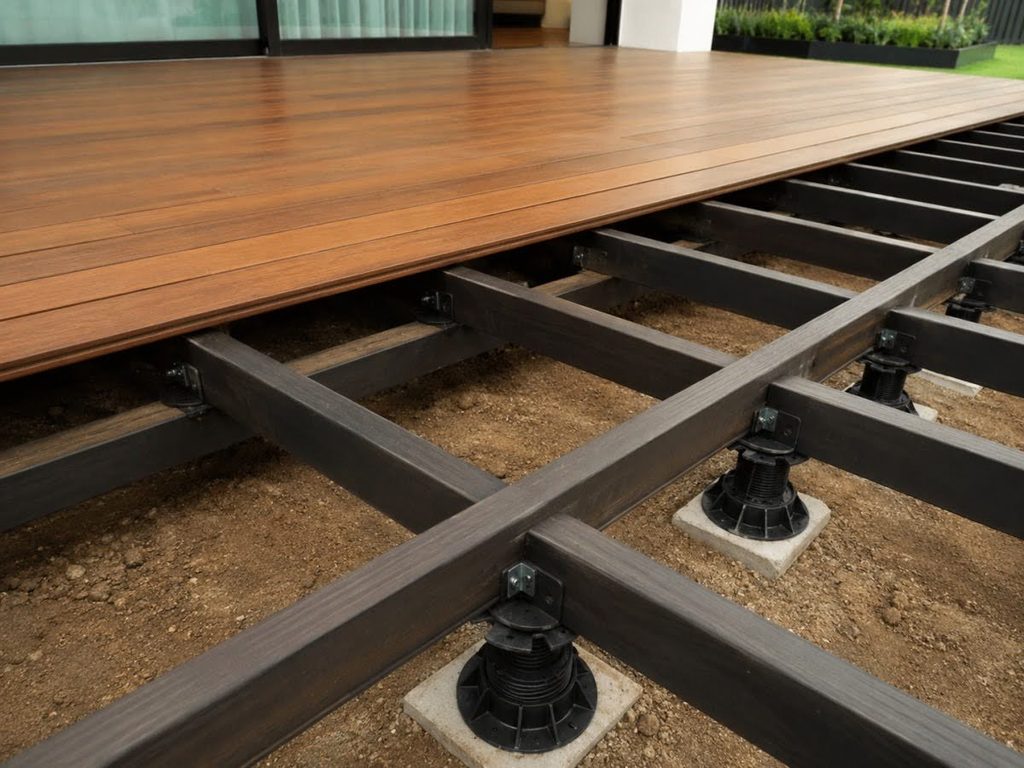
The substructure is the supporting framework beneath the visible decking boards and is fundamental to the stability and performance of a timber deck. A high-quality surface material cannot compensate for an unsuitable support system.
Joist spacing, material compatibility and installation quality influence how loads are transferred through the deck. Movement or deterioration beneath the boards can eventually affect the finished surface.
The substructure also influences drainage and ventilation. Water should be able to leave the area instead of becoming trapped around structural components.
For this reason, evaluating timber decking products only by the visible board specification provides an incomplete picture of the system.
Board Spacing and Natural Timber Movement
Board spacing allows for installation tolerances, drainage and the natural dimensional behaviour of timber. Appropriate spacing depends on the timber, board dimensions, moisture condition and decking system.
Natural wood responds to changes in environmental moisture. It can expand or contract across its dimensions as conditions change.
Spacing that is inappropriate for the selected timber may contribute to problems such as boards pressing against each other or unnecessarily large gaps developing.
A timber decking contractor should therefore install boards according to the characteristics of the supplied material rather than applying one spacing rule to every timber species and project.
Maintaining Timber Decking
Timber deck maintenance involves regular cleaning, periodic inspection and appropriate treatment where required. Maintenance helps property owners manage the appearance and condition of timber exposed to outdoor environments.
Routine Cleaning
Leaves, soil and other debris should be removed periodically. Accumulated organic material can retain moisture and obstruct drainage.
Cleaning products and methods should be suitable for natural timber and any existing finish.
Inspection
Periodic inspection can identify loose boards, damaged components, surface changes or drainage problems before they become more extensive.
Areas exposed to persistent moisture or heavy traffic may require closer attention.
Surface Care
Exterior timber naturally changes colour as it weathers. Owners who want to manage this appearance may use appropriate timber finishes or treatments.
The correct product and application interval depend on the timber species, existing finish and exposure conditions.
Drainage Maintenance
Drainage points should remain clear throughout the life of the deck. Leaves and debris can accumulate underneath or around outdoor decking.
Access for inspection and cleaning should therefore be considered during the original design.
Understanding Timber Deck Lifespan
Timber deck lifespan is determined by a combination of material quality, timber species, design, installation, environmental exposure and maintenance. It cannot be accurately predicted from species alone.
A durable hardwood may still develop problems when drainage is poor or the supporting structure is unsuitable. Conversely, appropriate installation and regular maintenance can help a suitable timber system remain serviceable for an extended period.
Conditions can also vary within the same deck. Areas exposed to direct rain may weather differently from sheltered sections.
Property owners should therefore view durability as a system-level outcome rather than a fixed number associated with a particular timber species.
Anti-Slip Considerations for Timber Decking
Slip performance depends on the surface condition, board profile, environment and maintenance of the deck. No outdoor surface should be assumed to remain slip-resistant under every condition.
Wet areas such as pool surrounds require particular attention. Organic growth, dirt and surface contamination can change the condition of the deck over time.
Regular cleaning is therefore relevant to both appearance and surface performance.
Where specific slip-performance requirements apply to a project, the proposed material and system should be assessed against the relevant project specifications rather than relying solely on general product descriptions.
Common Timber Decking Mistakes
Many timber decking problems result from a mismatch between material, design, installation and site conditions. Avoiding these mistakes begins with treating decking as a complete construction system.
Selecting Timber Based Only on Appearance
Colour and grain are visible immediately, but durability and suitability are equally important. The timber should be selected according to environmental exposure and intended application as well as aesthetics.
Ignoring Timber Quality
Knowing the timber species is not enough. Natural materials vary in quality, condition and consistency. Material should therefore be assessed according to the specifications required for the project.
Neglecting Drainage
Poor drainage can keep timber and supporting components exposed to moisture for unnecessarily long periods. Drainage paths should be incorporated into the decking design from the beginning.
Overlooking the Supporting System
Focusing exclusively on the visible decking boards can result in inadequate attention to the structure underneath. Substructure design, fixing and material compatibility contribute directly to deck performance.
Assuming Timber Requires No Maintenance
Timber is a natural material exposed to weather. Cleaning and inspection remain necessary even when durable hardwood species are used. Maintenance expectations should be understood before the deck is installed.
Using Inappropriate Cleaning Methods
Excessively aggressive cleaning can damage timber surfaces or existing finishes. Cleaning methods should be appropriate for the specific timber and its condition.
Why Consider Nam Soon Timber’s T-Deck System?
Nam Soon Timber’s T-Deck System provides a timber decking solution that brings the surface boards and supporting installation considerations into a coordinated system. A system-based approach is relevant because the performance of timber decking depends on more than the visible wood surface.
When evaluating the T-Deck System, property owners and project teams should consider the timber specification, support arrangement, installation environment and intended application. The appropriate configuration can differ between balconies, pool areas, gardens and commercial projects.
Professional assessment is particularly useful where the existing surface has drainage constraints, limited installation height or other site-specific conditions.
The objective should be to select a timber decking system that is technically appropriate for the project and can be maintained realistically throughout its service life.
Frequently Asked Questions (FAQs)
Suitable timber decking can be used in Singapore when material selection, installation, drainage and maintenance account for tropical conditions. Frequent rain and high humidity make moisture management particularly important.
Tropical hardwoods such as Chengal and Merbau are associated with decking and other exterior applications in the region. The appropriate timber should be selected according to quality, project specifications, exposure and intended use.
In most consumer and construction contexts, wood decking and timber decking refer to natural wood boards used to create a deck. “Timber” is generally the construction-oriented term for processed wood.
Yes. Timber decking should be cleaned and inspected periodically, with surface treatments used where appropriate. Maintenance requirements vary according to timber species, exposure, finish and usage.
Timber can be used for pool surrounds when the material and decking system are suitable for regular wet exposure. Drainage, surface condition and maintenance should be considered during design and throughout use.
Drainage allows rainwater and other moisture to leave the area rather than remaining around timber and supporting components. Effective drainage is especially important in Singapore because outdoor areas can receive frequent heavy rainfall.
Exterior timber generally changes colour as it is exposed to sunlight and weather. This is a natural weathering process. Appropriate maintenance and finishing can help manage appearance where retaining a particular colour is desired.
A suitable contractor should be able to explain the proposed timber, substructure, fixing method, drainage approach and maintenance requirements. Relevant experience with similar project environments is also useful when evaluating a contractor.
Building a Timber Deck for Long-Term Performance
Timber decking provides a natural outdoor flooring solution that can be adapted to residential, commercial and landscape applications. Its long-term performance depends on the complete system rather than on the timber species alone.
For properties in Singapore, timber quality, substructure design, drainage, ventilation, board installation and ongoing maintenance deserve particular attention because of the tropical climate. Evaluating these factors together provides a stronger basis for selecting and maintaining a timber deck.
Discuss Your Timber Decking Project
A timber decking project should be assessed according to its location, environmental exposure, intended use and existing site conditions. Nam Soon Decking Pte Ltd. can provide information on timber options and the T-Deck System for different outdoor applications.
Property owners, designers and project teams can contact Nam Soon Decking Pte Ltd. today to discuss the relevant timber decking requirements for a planned or existing outdoor space.