


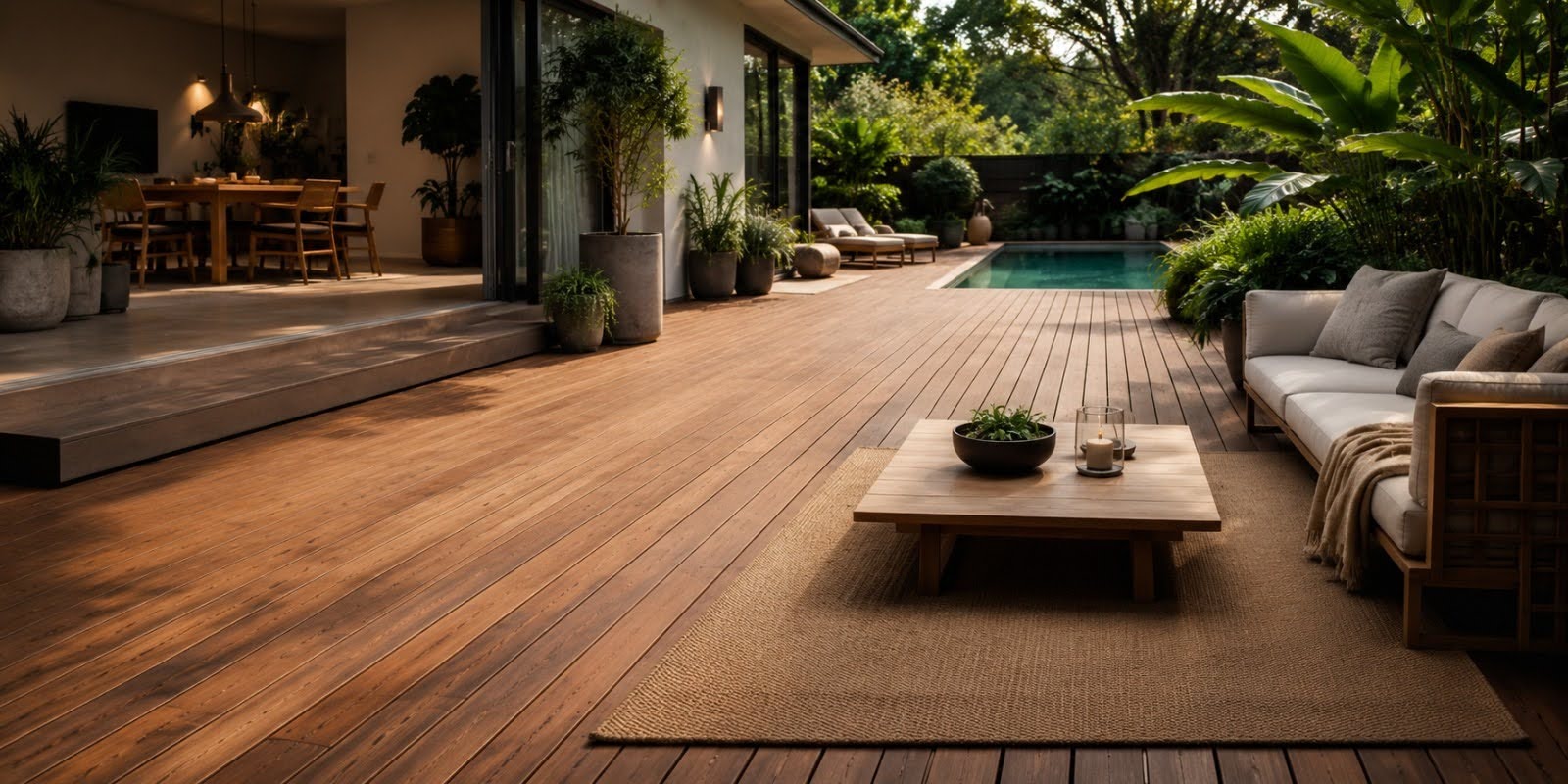
Wooden floor solutions are a popular choice for many homes as they are durable, come in a range of finishes, and easily complement the existing style of the house. Timber floor decking is a natural wood flooring system designed for exterior or semi-exterior spaces such as balconies, patios, gardens, pool areas and commercial outdoor environments. Its suitability depends on the timber species, supporting structure, environmental exposure and way the space will be used.
Unlike conventional indoor timber flooring, outdoor timber decking is installed to accommodate rain, humidity, drainage and natural wood movement. These differences influence both material selection and construction.
For Singapore properties, timber floor decking can provide a practical way to create defined outdoor spaces when the complete system is designed for tropical conditions.
What Is Timber Floor Decking?
Timber floor decking consists of timber boards installed over a supporting structure to form a stable walking surface. The boards are normally raised from the underlying substrate rather than bonded directly like many conventional indoor floors.
This configuration allows the system to incorporate drainage and support beneath the visible surface.
Natural timber remains responsive to environmental moisture, so board spacing and installation methods must account for dimensional movement.
The term can apply to residential decks, commercial outdoor flooring, landscape structures and other architectural applications where timber forms the main finished walking surface.
Residential Applications
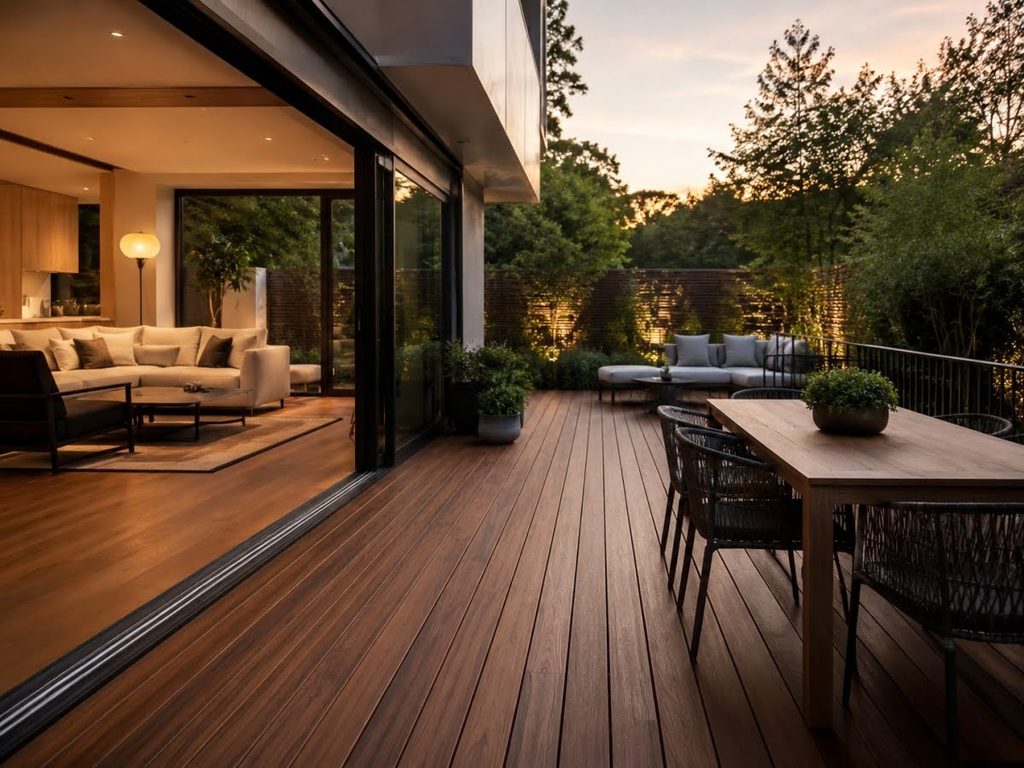
Timber floor decking can be used in homes where outdoor areas need a more defined or comfortable surface. Residential projects often prioritise appearance, integration with interior design and manageable maintenance.
Balcony Decking
Balcony decking can create a natural timber finish over an existing balcony surface. Available installation height, drainage and access to building components should be assessed before work begins.
Condominium and apartment projects may also be subject to property-specific renovation requirements.
Patio Decking
Patios can use timber decking to establish seating, dining or transition areas between the home and garden.
The supporting surface and exposure to rain should be evaluated so the deck can drain correctly.
Garden Decking
Garden decking is commonly used to define outdoor seating or circulation areas. Landscaping can increase exposure to leaves, soil and retain moisture, making cleaning an important maintenance task.
Pool Decking
Timber can be used around swimming pools when the selected material and system are suitable for wet conditions.
Surface maintenance and drainage deserve particular attention because these areas experience regular contact with water.
Commercial Applications
Commercial decking can be used for hospitality, offices, retail environments, landscape developments and communal outdoor areas. These applications often involve higher foot traffic and more demanding operational requirements than private homes.
Restaurants and cafés may use outdoor timber flooring for dining areas. Hotels and hospitality projects may incorporate timber into pool surrounds, terraces and landscape spaces.
Commercial developments can also use decking for pedestrian routes or common areas where a natural material complements the broader architectural design.
Higher usage means that maintenance access, inspection frequency and durability should be considered carefully.
Commercial projects may also require coordination with architects, contractors or other trades, making system specifications and installation planning particularly important.
Indoor vs Outdoor Timber Flooring
Indoor timber flooring and outdoor timber decking both use natural wood, but they are designed for different environmental conditions. Indoor flooring generally operates in a controlled environment with limited exposure to direct rain and sunlight.
Outdoor timber flooring must account for:
- Rain and surface water
- Higher moisture exposure
- Direct or indirect sunlight
- Outdoor temperature changes
- Drainage beneath the surface
The installation methods therefore differ. Indoor timber flooring may be fixed directly to a prepared substrate, while decking normally uses a supporting structure that allows spacing and water movement.
Timber suitable for indoor flooring should not automatically be assumed to suit exterior decking.
Installation Considerations
Correct installation is essential because timber decking performance depends on the complete system. The project should begin with an assessment of existing levels, drainage, available height and environmental exposure.
The substructure needs to provide stable support for the decking boards. Support spacing should suit the board dimensions and intended loading.
Drainage must remain functional after installation. Existing drain outlets should not be obstructed, and water should be able to move away from the decking area.
Board spacing is another important consideration. Natural timber can expand and contract as its moisture content changes.
Fixings should be suitable for the chosen decking material and outdoor conditions.
After installation, the deck should be checked for alignment, stability and accessibility to required drainage or building components.
Useful Maintenance Tips
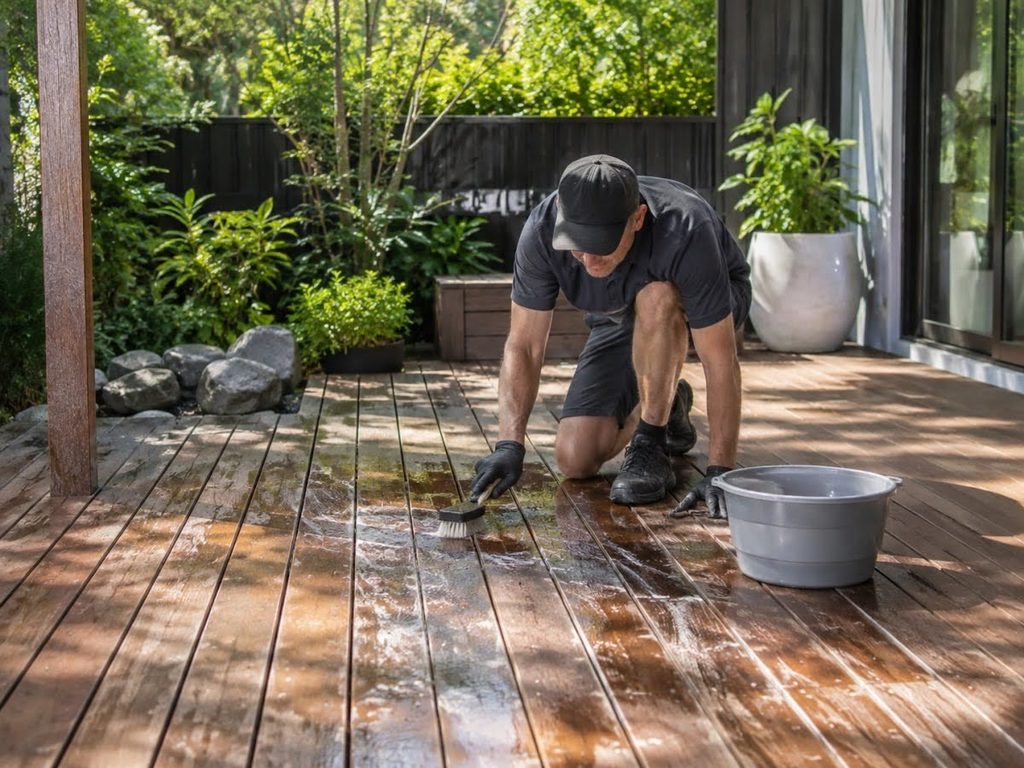
Timber decking requires cleaning and periodic inspection to manage the effects of outdoor exposure. The level of maintenance depends on the site, timber species, finish and usage.
Routine maintenance should include removing dirt, leaves and organic debris. Board gaps and drainage points should also remain clear.
Owners should periodically check for loose boards, damaged components or localised water accumulation.
Where surface treatments are used, they may need to be reapplied at appropriate intervals. Natural weathering and colour change should be expected even when the timber remains serviceable.
Commercial decks may require more frequent inspections because of higher foot traffic.
Choosing the Right Timber
The right timber for floor decking should match the project’s environmental conditions and functional requirements. Hardwood species are commonly considered because appropriate hardwoods can provide durability and strength for exterior use.
Timber species such as Chengal and Merbau are associated with outdoor applications in the region, although the actual quality and specification of the supplied material remain important.
Selection criteria should include exterior suitability, board quality, expected exposure, foot traffic and maintenance expectations.
The visual appearance is also relevant, but colour and grain should not be the only decision factors.
A timber decking supplier or contractor should be able to explain why a particular material suits the proposed project.
Frequently Asked Questions (FAQs)
Yes, provided the balcony has suitable site conditions. Drainage, available height and any building-specific requirements should be reviewed before installation.
Timber can be used for commercial decking when the material and system are selected for the expected usage. Higher-traffic areas may require more frequent inspection and maintenance.
No. Outdoor decking must account for weather exposure, drainage and natural movement under changing moisture conditions.
Yes, where the timber and installation system are suitable for wet environments. Drainage and surface condition should be carefully maintained.
Maintenance frequency often increases with foot traffic and environmental exposure. Commercial spaces should have an inspection routine appropriate to their usage.
Where Timber Flooring Performs Best
Timber floor decking is suitable for a wide range of residential and commercial spaces when the timber, substructure and installation are matched to the site. The strongest applications are those where drainage, environmental exposure and long-term maintenance have been considered from the beginning.
A project-specific approach is more reliable than applying the same decking specification to every location.
Assess Timber Decking for Your Space
Different residential and commercial environments place different demands on a timber floor. Nam Soon Decking Pte Ltd. can provide information on suitable timber decking systems and installation considerations for a range of project types.
Property owners and project teams can get in touch with the team at Nam Soon Decking Pte Ltd. to discuss the intended application and site requirements.